Showing posts with label San Joaquin Valley. Show all posts

Sunday, May 5, 2013

Natural gas overtakes solar and wind in clean energy race

Is fracking the clean energy future?
Several years ago, I was newly downsized from the newspaper industry that had been my life for the better part of the previous 25 years.

My options were hardly inspiring. My dad was slowly dying of Parkinson's and dementia, royally pissed off at the guy he considered his jailer -- me. The news business tanked. The jobs that remained had a bunch of us old veterans lining up. Salaries were 50 percent or less what we had made.

I had purchased a foreclosed house in terrible shape to rent and subsidize the cost of my father's care. On the positive side, it took six months to repair. I relearned a lot of construction skills.

Clean energy to the rescue

Then after seven months, I found another line of work. The American Reinvestment and Recovery Act was by then in full swing, and it covered my salary assisting cities and counties in California's San Joaquin Valley installing energy efficient lighting, cooling systems and even insulation. Not too sexy to be certain, but it offered insight into the entirely new realm of clean energy.

Clean energy at the time still had a lot of hurdles, but with federal stimulus money and constantly increasing costs for fossil fuels the holy grail of cost "parity" appeared attainable. A former co-worker and I started blogging about it, using news gathering talents honed over decades to debut the latest studies, technologies and breakthroughs.


Sunday, October 7, 2012

Hidden costs of fossil fuels amplify case for clean energy

Hidden costs lurk everywhere.

Buy a car on credit and pay double the sticker price. Same with a house. For instance, adjustable mortgages and balloon payments contributed mightily to the real estate meltdown. And taxes take a big bite. Just ask any small businessperson.

Maybe that's why we Americans like our energy costs low, or at least relatively.

But there are hidden costs there, too. Harvard Medical School's Center for Health and the Global Environment released a study that pegged the estimated hidden yearly cost of coal-generated electricity at a high of $538 billion, or an additional 18 cents per kilowatt hour. Peswiki.com listed the commercial cost of coal power at 4.8 to 5.5 cents per kWh.

For some perspective, solar costs between 15 to 30 cents per kWh and wind 4 to 6 cents.

Heavy burden

"Coal carries a heavy burden," the "Mining Coal, Mounting Costs" report said. The Harvard study factored in health costs (11,000 deaths annually from lung cancer, heart, respiratory and kidney disease) and environmental impacts of fly ash spills (53 from 1974 to 2008) and mountaintop removal (500 removed and 1.4 million acres transformed).


Algae fuel and solar could use a little entrepreneurial True Grit

Developments in solar and biofuels lead me to believe that the sunny San Joaquin Valley could indeed become a leader in the emerging clean energy industry.

My friend Sandy Nax has called the Valley a Petri dish for alternative energy development because it has so many of the necessary attributes: available land, scorching sun and/or clear days a majority of the year, wind in the mountains and scads of agricultural resources for biofuel or biogas.

Sandy has often said, "Clean energy could be a game changer." He was referring to the economy.

Sandy and I discuss the attributes of the sorry state of economic affairs that have devastated the region's real estate, toppled government tax revenues and put many of our neighbors out of work.

Changing the world
 
We used to work in the newspaper business, which hasn't fared well these past several years. As part of our jobs writing and editing business stories, we spent years analyzing trends and making sense of them.

This clean energy trend has been fascinating to watch. I still have no idea where it's going and what particular component will be the first to fuel jobs, but indicators have been extremely positive.


Here comes fat algae; research unveils potential commercial fuel production

Less so now but until recently every couple of weeks appeared to bring an algae fuel technological breakthrough, study or news of a pilot venture to bring the process from the laboratory to your corner fuel station.

Granted, fueling up with algae products is likely many years away. But it's being taken seriously. Right here in the San Joaquin Valley, experts at the University of California, Merced have been awarded a grant to analyze emerging algae biofuels technologies.

And the U.S. Department of Energy has recently announced that it will be accepting applications for $12 million in grants over the next three to four years for about five "laboratory or small pilot-scale projects that support the development of advanced biofuels." Technologies like cellusic ethanol or fuel-tank-ready butanol may be first to the gate, but algae research has a strong shot.

Algae breakthrough

For instance, John Sheehan, who coordinates research on biofuels at the University of Minnesota’s Institute on the Environment, just produced a 34-page study about a algae-to-fuel breakthrough discovered by scientists researching cancer treatments. The study was developed on behalf of VG Energy, a subsidiary of San Marino, Calif.-based. Viral Genetics Inc.

Those researchers found that molecules which disrupt the burning of fats, or lipids, in tumor cells "also encourage microscopic plant cells like algae to accumulate and even secrete fats," Sheehan wrote.


Clean energy is bigger than birthdays: Hello solar valley

I turned 50 and marked the occasion as I normally would.

"Oy vey."

Now I'm facing 52, and it's no different.

Yet, such landmarks are memorable for a number of reasons. A co-worker got honored with both barrels with a combination of family members and fellow employees decorating his cubicle with RIP messages. In my case, it means I'm the age Saturday Night Live alum Molly Shannon made fun of as Sally O'Malley in quite a few high-kicking bits.

But the achievement, the coming new year and the birth of my second grandchild has gotten me to think even more about the big picture, the grand scheme. And not so much my role in it but how everything shakes out. 

Real existential, almost Kierkegaardian?


Friday, October 5, 2012

Tips on installing (semi) big solar, pro and con

Cities and counties in California's San Joaquin Valley want relief from crippling energy bills.

Like the rest of the nation, they’ve been hit hard by a sinking economy and increasing electric rates. At least the tornadoes, flooding and general havoc from winter storms left them alone.

An option looking increasingly bright is solar. But it’s a complex decision and not one that should be made without learning as much as possible.

The San Joaquin Valley Clean Energy Organization has a draft plan to explain solar options to cities, counties and school districts and help them save the most energy and money. The concept is one I've been thinking about for several months.

Of course, it's something on the drawing board. We're a small nonprofit without the ability to launch such ambitious project without funding. Tracking down some money will be my next step.

My thought is the utilities may like the idea since they need to draw a third of their energy from renewable resources by 2020. And solar companies may also like the idea. Perhaps we could put a consortium together and offer discounts for packaged projects.

Who knows?


Breathe deep, our polluted air could use a filter

Air quality in the San Joaquin Valley regularly registers in the unhealthy range.

I'm quite familiar with this because I run every day. When at about 2 or 3 miles it feels like somebody's punched me in the throat and chest (and I feel decent otherwise), I know it's a bad air day.

Air quality is just an indicator, a very noticeable one, that's saying, "Hey, chill on the pollution." We're topping off on bad ozone, the colorless gas that forms near the ground when the emissions of cars, power plants, industrial boilers, refineries and chemical plants react chemically in sunlight. There's also an increasing load of carbon monoxide, sulfur dioxide and particle pollution.

Runner's cough

At first, I thought I was just getting old. I'm 50. But then I started asking around. No, runners say, you feel bad probably because of the air. This is Fresno, they say, where the nearby majestic Sierra are often masked by haze of murky gray/white/brown.


Solar jobs come to San Joaquin Valley

Clean energy is making an economic mark in the San Joaquin Valley.

Really.

The Green Report, issued by Proteus Inc., a nonprofit that provides community work force training and other services based in Visalia, Calif., lists a projected job forecast of 12,125 jobs related to construction of solar facilities.

"With the amount of new solar companies looking at the Central Valley to implement utility-sized photovoltaic installations in the double digits, the future looks bright for solar installation and employment," writes the report's author, Hector Uriarte Jr., who heads up the Proteus solar training program.

Solar projects planned

Solar is definitely coming. The California Public Utilities Commission lists 46 small to medium sized projects on its "on schedule" list for the state. More are sure to be added.

And there are, according to the California Department of Fish and Game, 93 proposed solar projects planned on 64,000 Valley acres that have no environmental conflicts and can proceed without opposition.

MID gives to UC Solar

Economic effects go beyond simple solar installations. The Merced Irrigation District has committed $10,000 to the University of California Merced's Advanced Solar Technologies Institute.


Testimonial: Energy efficiency can be tough (sometimes)

For the past two years, I've been helping cities and counties prepare to install energy efficiency retrofits.

It hasn't been simple. We're working with federal grants with very particular requirements. But the challenge caters to my make-the-world-a-better-place sensibilities.

And we've got a lot of company. Energy efficiency has caught fire in the past couple years. In the corporate world, companies are installing lighting and other electrical retrofits and establishing sustainability policies that revamp manufacturing and distribution practices. Their directive is to cut waste and promote savings of not only but energy but water and other materials.

Building information modeling, which enables designers to drop energy use like a rock, is sweeping the urban construction industry and is threatening to encompass more. Managers have learned to shave significant energy costs by monitoring and adjusting power consumption before construction and during occupancy. New products are coming on light rapidly that allow greater central control and monitoring.

And utilities are reworking their distribution networks by incorporating smart grid technology that offers game-changing savings through broad energy management protocols.

Into the light

Lighting retrofits are possibly the most cost-effective of these measures. And they're much of what I'm in charge of at the San Joaquin Valley Clean Energy Organization. We've also got air conditioning, pumps and other retrofits.

Yet getting our projects installed has not been simple. From my Formica-covered table top in Fresno, I have been working to funnel federal stimulus money into the Valley economy via Energy Efficiency and Conservation Block Grants. It's been a long road. We're finally getting the projects bid, materials purchased and at least some problems resolved.

Some issues still pose difficulties. Because of the relatively low rate of reimbursement offered by the California Energy Commission for the energy efficiency retrofit measures, some of my cities and counties have struggled to find contractors. The small size of some projects haven't helped.

Get 'er done

The state has been working frantically to get jurisdictions finish their projects by the March 14, 2012 deadline. But California Energy Commission project officers can only offer advice and direction -- no extra funds.

I heard one county was able to figure out how to pay for the replacement of air conditioning units on the maximum reimbursement of $1,000 per ton. That's a pretty big deal, by the way. So I gave the woman in charge of the program a call.

She said her county had no magic bullet, just an employee who had spent years in the HVAC trade. The county purchased units from a manufacturer that certified its products as Buy American-ready and installed them itself rather than going to an outside contractor.

Energy savings American style

The SJVCEO wants to maximize the value of the American Recovery and Reinvestment Act grants my team is administering. When complete, the retrofits would save 5.4 million kilowatt hours of electricity. We want to save all that energy.

However, about four months remain before our deadline to complete the work, and a number of our jurisdictions still need contractors. Many of our cities don't have the staff to do their own retrofits. All have had to make drastic budget cuts because of the economic slide of the past few years.

We discovered almost immediately that because of the reimbursement rates our jurisdictions were having trouble attracting interest even in this down economy. Requests for proposal issued by several cities turned up no interested bidders, while others came in with bids that far exceeded reimbursement costs.

Finding solutions

My boss charged my co-worker Sandy Nax and I to come up with a solution. We followed the formula of using a sole proprietor who has no employees and does all the work himself, thus avoiding Davis Bacon wage rates. But this work is difficult for one person.

Sandy tracked down names using an online contractor search engine and California's Contractors State License Board listings, and I started cold calling.

I eventually called 83 contractors all over the San Joaquin Valley. Three contractors expressed interest in air conditioning retrofits.

I'm hopeful we'll find lighting contractors interested as well. I'm not so sure about pump retrofits, but we all have our fingers crossed.

Nothing's simple with grants

I've been on the phone a lot explaining how the process works. Reimbursement is likely going to be slow, making it tough for contractors already strapped by an unforgiving economy.

I did reach a friendly contractor in Kingsburg who said, "I'm not interested in anything to do with the government." I get that. Seriously, I do. Working within the strict confines of federal grant requirements is enough to make anybody relate to rocker George Thorogood's request for "one bourbon, one scotch and one beer."

Maybe when the job's done. We're determined to make this work.

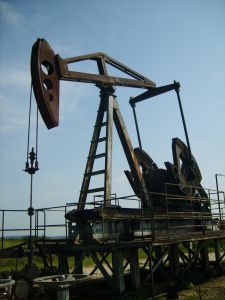
Photo: Corcoran pump 9A where we have retrofits planned.
Solar joins the right-price energy club

Solar parity is here.

Honest. That's what a new study from Queen's University in Kingston, Ontario says.

"Given the state of the art in the technology and favourable financing terms it is clear that PV has already obtained grid parity in specific locations," say K. Brawker, M.J.M. Pathak and J.M. Pearce in the report, "A Review of Solar Photovoltaic Levelized Cost of Electricity."

That and technological innovation, which is driving up solar system efficiencies, could open new markets and spur significant development of projects focused on harvesting the sun's energy. In California's San Joaquin Valley, we're already seeing the results with about 40 projects in the works in Fresno County and at least as many in nearby counties.

Ferocious cost reductions

Sami Grover, from treehugger.com, put it this way: "With the solar industry delivering ferocious cost reductions, falling as much as 11 percent in just six months, it's little wonder that some predict that solar will be cheaper than coal in the very near future."

A cleantechnica.com editor says the findings by Queen's University don't even take into account health, energy security and environmental costs of fossil fuels "and it STILL finds that solar has reached grid parity in many places."

The recent Durban Climate Summit clarified the dangers of allowing pollution to continue without restraint. The cost and potential damage of unparalleled production of greenhouse gases is impossible to determine. But one thing's for certain, it will be huge.

The rapid innovation of solar technology offers a way to cut into reliance on fossil fuels. Whether it will make a difference is anybody's guess.

Solar interest high

A solar research symposium at the University of California, Merced, Dec. 9, 2011, draws students and researchers from UC Merced's program, which is fast becoming a leader in solar research, and University of California campuses of Berkeley, Davis, Santa Barbara and San Diego as well as other universities. All report that their programs are working hard to improve the efficiency of solar cells.

At the symposium, Sarah Kurtz, interim director of the National Center for Photovoltaics and principal scientist at the National Renewable Energy Laboratory, tells my co-worker Sandy Nax that costs are dropping "spectacularly."

Nax also reports in a recent post that the industry is expanding at a robust rate with photovoltaic shipments doubling every two years.

Gaining efficiency

While many photovoltaic cells on the market range between 12 and 20 percent efficient, moves are being made to increase that number significantly. However, those technologies also cost more. "The challenge is to make high efficiency with low cost and high reliability," Kurtz says.

Some in our sun-drenched valley are concerned about seeing solar panels everywhere, especially on prime farmland. Nax tells me that efficiencies reduce solar's footprint and likely will improve its image, especially amongst concerned farmers.

That and estimated $1 per watt equipment costs will go a long way toward influencing standards that include photovoltaic panels as part of nearly every newly constructed building or major retrofit and remodel. Toss in escalating electricity rates, and solar may become as common as flat-screen television sets in American households.

But rather than offering entertainment, this electronic device will create a new era of distributed energy.

Nothing's easy

There will be challenges. For instance, what happens when the sun falls below the horizon? Cheap solar provides options that weren't otherwise available. Perhaps production of hydrogen will become more widespread that either can be used in fuel cells or in other applications.

Political leaders also will have to knuckle under and institute more laws like California's Global Warming Solutions Act, which seeks to reduce the state's greenhouse gas emissions to 1990 levels, and the requirement that utilities get a third of their energy from renewable sources by 2020. Otherwise, the incentive by the private sector to start figuring out cleaner alternatives might not great enough to foster widespread change.

It can be done. Even at Durban, which drew representatives from 190 countries, leaders in the final hours of the Climate Summit put together what some media sources call a road map to a legally binding climate treaty by 2020.

We'll see.

EPA honors Clovis plating company for 'extreme makeover'


A Clovis, Calif. chrome plating company has won recognition from the U.S. Environmental Protection Agency for efforts to clean up and change the way it does business.

Valley Chrome Plating substituted lead anodes and hexavalent chromium with the less harmful alternative of graphite and trivalent chromium. EPA officials say the switch reduced "harmful chemicals by 9,000 pounds — significantly protecting the environment and worker exposure."

It's "kind of an extreme makeover plating edition," says James Galvan, Valley Chrome's plating supervisor. "We get a lot of 'wows.'"

The company also was recognized by the California Department of Toxic Substances Control, which says Valley Chrome is on its way to becoming a national leader for its chemistry substitution.

While Valley Chrome didn't institute energy efficiency savings or install renewable energy that reduces greenhouse gas emissions, it did pull off something at least as significant by making environmentally responsible changes that also benefit the company's bottom line.

"We're actually saving money being greener," says Ray Lucas, owner. "It makes perfect sense environmentally and financially."

Jared Blumenfeld, EPA’s regional administrator for the Pacific Southwest, put it this way: "This is a great example of how a company can protect its employees and the environment while growing its business and providing important local jobs."

Blumenfeld visited the San Joaquin Valley, making Valley Chrome one of his stops on a two-day “Whistle Stop Tour." He also also visited California State University, Fresno to tour the Center for Irrigation Technology's state-of-the-art hydraulics lab. His mission was to discuss efforts within the industry to create jobs and talk with students about the campus organic farm. The agenda included a forum on drinking water issues in rural communities.

Green chemistry is intertwined with clean energy, water conservation and sustainability. The movement by U.S. businesses adopting such measures is gaining momentum on a monthly basis. Net-zero impact, which had near-zero proponents among the Wall Street set just five or 10 years ago, is getting a closer and tangible look by companies across the nation, especially because many of the measures simply make sense and save money.

Get a glimpse of domestic clean energy innovation, screen the YERT film

The folks at yert.com spent about a year on the road gathering material for their documentary on clean energy.

Now that the production and editing is complete, their mission is to get their movie seen by as many people as possible. It's no easy task as any documentary filmmaker will say. Even the duo who put together this year's Oscar winner, "Undefeated," tells National Public Radio how thrilled they were to get the radio interview just for the exposure. And they like NPR.

The crew who put together "Your Environmental Road Trip" isn't in the Oscar running yet. The team nailed a series of interviews with some of clean energy's pioneers and most interesting innovators. A guy who's devised a solar road was the first to capture my interest.

The YERT people describe the film this way:
About the courageous and creative individuals, groups, businesses and leaders of this country who are tackling the greatest environmental threats in history. Called into action by the ever increasing threats of planetary catastrophe (from climate change to toxic pollution, from water scarcity to habitat destruction), the three of us - Mark Dixon, Ben Evans, and Julie Dingman Evans - upended our lives, pooled our collective life-savings, and set off on a first-of-its-kind, 50-state, year-long journey of discovery to personalize sustainability and to answer a critical question: ARE WE DOOMED?

Mark Dixon says YERT is now on its West Coast Screening Tour. He mentions a screening coming up at 7 p.m. in Seattle on March 2. Here's a link: https://www.facebook.com/events/273796256023191/. Location is Keystone Congregational Church, 5019 Keystone Place N, Seattle, WA 98103-6229.

That same day there's another in Gainsville, Florida at the Cinema Verde Enviro Film & Arts Festival. On March 3, they head to Portland, Ore., and at 6 p.m. March 9, they start a two-day showing a the San Luis Obispo Film Festival at the The Palm Theatre, 817 Palm St. Dixon will be there to talk about the film.

If looks at all doable, go to yert.com and put in a request under "Screenings." Look at the trailer while you're at the site. The screening dates of March 12 and 13 are available.
The San Joaquin Valley is a place ripe for clean energy development and the jobs it could generate. The staff at University of California Merced has dubbed the region the Solar Valley for its potential. And developers are in the midst of a record number of commercial, industrial and residential projects.

Anything that jump starts the imagination of Valley residents could be a game changer. Here at the San Joaquin Valley Clean Energy Organization, we talk often about what small event could push all these projects forward like dominoes.

Maybe somebody will agree to screen Dixon's movie in Fresno, and the event's synergy will start more dialogue. After all author and activist Bill McKibben says: "Here's a trip you'll wish you'd taken, and you'll be glad you get to watch! And Jeff Biggers of the Huffington Post writes: "A deeply absorbing ... hilarious ... important film. Audiences will not only cheer, but feel compelled to spring to their feet to join an inspiring movement for change."

Photo: YERT interview with owner of Rufus the solar bus in Hawaii.

Firebaugh finds green beyond its verdant fields

The City of Firebaugh is now home to a total of 81 brand new light emitting diode, or LED, street lights, and they’re casting a brighter glow on City streets than the old high-pressure sodium bulbs they replaced.

The new lights are also significantly more energy efficient, saving the City much needed cash on its utility bills.

What this means to the average taxpayer is significant savings to City coffers through lower utility bills. The energy efficiency retrofits when complete will save the City about 26,516 kilowatt hours of energy per year. This roughly equates to a savings of about $3,372 a year.

And that’s a big deal in these troubled economic times.

Another big deal is that the entire project isn’t costing the City a dime. The money that makes the project possible comes from an Energy Efficiency and Conservation Block Grant provided through the American Recovery and Reinvestment Act of 2009. The program is administered through the U.S. Department of Energy and the California Energy Commission.

The project is one of several the City is pursuing to improve its future. The west-side Fresno County community of 7,000 hasn't let size get in its way of its ambitions, attracting solar and biofuel interests and pursuing sustainability.

Firebaugh's long-term strategy is to lower its greenhouse gas footprint and improve its quality of life. The City is working with the U.S. Department of Housing and Urban Development through its Sustainable Communities Initiative. The goal of the program is to provide equitable development, planning and development approaches for achieving shared prosperity.

The City also launched an effort to better connect with the free-flowing San Joaquin River. The community began as a ferry crossing when most traffic into the Valley traveled via a much more robust waterway.

For the street light project, Firebaugh joined with 35 other cities and counties in the region to form the San Joaquin Valley Clean Energy Partnership, which is led by the San Joaquin Valley Unified Air Pollution Control District with the assistance of the nonprofit San Joaquin Valley Clean Energy Organization. The Partnership administers the more than $4 million in grants and provides technical assistance to local governments.

The City worked with Pacific Gas and Electric Co., which installed the lights through its LED street light retrofit program.

Sunday, September 23, 2012

Climate change: Water woes haunt Californians

California would sidestep most of the effects of climate change.

The state already is hot and dry, and its coastal areas, with some exceptions, are blessed with some elevation, enabling them to avoid disaster should the seas rise significantly. But one region, the Sacramento-San Joaquin River Delta, faces distinct peril, says climate risk analyst Richard Snyder.

"You'll have a problem," says Snyder who spoke at the 2012 International Green Industry Hall of Fame event in Fresno. "Water and climate change are big issues, especially in California."

The Delta is a complex network of levees and channels and the source of water for two of three people in the state. Fresh water from the Sierra Mountains is sent by way of a massive aqueduct and a sophisticated and energy-intensive network of pumps down through the San Joaquin Valley and up over the Grapevine pass to Los Angeles.

When the levee breaks

Should that aging network of levees fail, disaster would strike. Years of farming the roughly half million acres caused large swaths of the peat-rich soil to drop, so that now much if it is below sea level. Some more than 20 feet below. Salt water intrusion would poison the Delta fresh water source, causing extreme economic cost on a scale hard to imagine.