Showing posts with label solar. Show all posts

Friday, May 31, 2013

Climate change: Indecision creates an increasingly dismal future

Photo courtesy bloguin.com
Looking into the future is a universal concept. While ancient man stared at the heavens for clues on what the seasons would bring, contemporary corporate man stares at the electronic equivalent of financial ticker tape, trying to discern future financial trends.

No matter what the era, those who picked right usually reaped some reward.

But from a climate scientist's perspective, every scenario looks pretty grim. Climate change is coming. It's just a matter of determining how dramatic it will be. Choosing the level of environmental impact due to rising levels of carbon dioxide, nitrous oxide and other pollutants leading to global warming depends on how quickly society accepts the situation and reacts.

Change is coming

Changing direction is impossible. An analogy made by the California Air Resources Board likened the situation to a person rowing a boat into a dock. Because the boat already is moving forward, it can't come to an immediate stop. Pulling the oars from the water will help. But what's needed is immediate reversal. In other words, dip those oars in and start reversing course. The boat will still drift forward, but it will begin to slow and turn.

What we're doing now, the ARB says, is rowing forward as if there's nothing ahead to ram into.

Boom.

In November 2000, the Intergovernmental Panel on Climate Change, which was jointly established by the World Meteorological Organization and the United Nations Environment Programme, released a report on the climate scenarios facing the planet. The highly technical report says everything depends on stemming the increase in emissions and decoding "long-term uncertainties."

Sunday, May 5, 2013

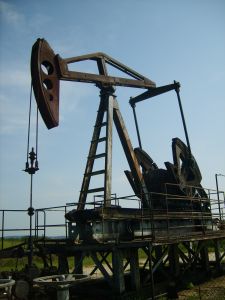
Natural gas overtakes solar and wind in clean energy race

Is fracking the clean energy future?
Several years ago, I was newly downsized from the newspaper industry that had been my life for the better part of the previous 25 years.

My options were hardly inspiring. My dad was slowly dying of Parkinson's and dementia, royally pissed off at the guy he considered his jailer -- me. The news business tanked. The jobs that remained had a bunch of us old veterans lining up. Salaries were 50 percent or less what we had made.

I had purchased a foreclosed house in terrible shape to rent and subsidize the cost of my father's care. On the positive side, it took six months to repair. I relearned a lot of construction skills.

Clean energy to the rescue

Then after seven months, I found another line of work. The American Reinvestment and Recovery Act was by then in full swing, and it covered my salary assisting cities and counties in California's San Joaquin Valley installing energy efficient lighting, cooling systems and even insulation. Not too sexy to be certain, but it offered insight into the entirely new realm of clean energy.

Clean energy at the time still had a lot of hurdles, but with federal stimulus money and constantly increasing costs for fossil fuels the holy grail of cost "parity" appeared attainable. A former co-worker and I started blogging about it, using news gathering talents honed over decades to debut the latest studies, technologies and breakthroughs.


Monday, November 12, 2012

Zombie training for the apocalypse, running from the Dead

"Walking Dead's" Michonne kills the undead.
Katana in hand, Michonne shears body parts from a half dozen shambling zombies in the "The Walking Dead."

She gives a slight smile when the mayhem's complete in "Say the Word" Episode 5. Reid Kerr of examiner.com says it's her first grin on the wildly popular cable show on AMC. He predicts more in the episode ahead when the creepy Governor, who leads a protected community, hunts her down and she digs in with a bit of defense.

The show is the latest in the zombie-apocalypse genre that began so convincingly with George Romero's "Night of the Living Dead" in 1968. Romero was the first to use zombies, or "ghouls," as metaphor. Elliot Stein of the Village Voice says Night's "gorefest" had the look and feel of a documentary. He says its Pennsylvania farmhouse location showed Middle America at war, and "the zombie carnage seemed a grotesque echo of the conflict then raging in Vietnam."

Cataclysmic metaphor

"The Walking Dead" updates the theme and adds multiple story lines. The product intrigues enough people that the network justifies a talk show dubbed "Talking Dead," which appears after the airing of an original episode. Even Kerr's Episode 5 Examiner story is a character play-by-play of who did what and what's expected.

The power of the Walking Dead, at least for me, was series star Rick Grimes, played by Andrew Lincoln. He's a small-town sheriff who rallies a small band of survivors. Great stuff, especially the characters who, like Michonne, don't let adversity get in the way.


Sunday, October 7, 2012

Space-based clean energy could alter the future

Harry Harrison at his best.
Clean and cheap energy has been percolating in innovators' minds for centuries.

Far longer ago, alchemists and wizards sought the source of ultimate power somewhat differently, calling it magic.

The economic consequences of cheap clean energy would be tremendous. Imagine energizing rural Africa or infusing India's poorest neighborhoods with uninterrupted inexpensive power. All that brain power just waiting for an opportunity to connect with a money-making idea could make substantial changes in technological development, not to mention economic might.

So far, however, that pursuit remains unrealized. Recall cold fusion? How about the mythic magnetic power generator, a device that purports to produce "free" electricity.

Alas, it's a crock. So far, anyway.

Pursuing clean energy

That doesn't stop the pursuit of some nearly free energy source. Or the daydreaming. Or the bona fide research bringing existing clean energy technologies more in line with the cost of conventional carbon-creating fuels.

Writers regularly take on the challenge, imagining star travel as the likely result of conquering energy. Isaac Asimov's universes were fueled by atomic power. Even Albert Einstein and Otto Stern envisioned a hidden source of power in all things. They called it Nullpunktsenergie, which was later translated to zero-point energy. Imaging that is one thing. Tapping it is another.


How ripping off my roof put me on the fence about solar

Back in spring 2010, my wife said it was time: Rip off the roof and put on a new one.

Simple right?

Hardly. It took four months.

But it got me thinking: With a fresh, new 30-year composition shingles, what would it cost to put a solar system on the roof? Hmmm... So I called Julie at Solar City. I told her some of the details of my house -- that it's 1,278 square feet, that my kWh consumption according to my PG&E bill never exceeded 900 per month and that I was only looking to pick her brain for information.

Not a great way to get information, but at least I was straightforward. Julie told me a number of things I missed but did say I'd be spending between $20,000 and $25,000 for a system and that I could get a 30 percent tax incentive. One thing I would have that she said was important: a new roof.

Roof quality a must

Or at least I will have a new roof. Some day. Anybody ever watch an asphalt shingle melt in your hands? Not a pleasant experience. That means, when it's hot, don't roof.

That's -- mostly -- another story.


Solar could unlock path to clean energy; the sooner the better

The man with gnarled hands was a legend in Skagit County.

Many in the Washington state farming region said he could find water in a desert. The man's name eludes me and I'm sure he passed from this world, but he developed a reputation for finding the shortest route to tap fresh ground water. He charged nothing, and people from all walks swore by his skills.

I feel like asking that old water witcher for his advice now. But rather than water, I'd ask him to work his magic on the clean energy industry. Maybe take that fresh-cut Y-shaped branch and point to the shortest route for unlocking thousands of jobs in the promising sector.

Kind of a wise man (or woman) on the mountain thing.

After several years of hype, the clean energy industry appears on the verge. Solar's finally looking like it's got the chops to compete. Biofuel breakthroughs may propel relatively cheap new sources of U.S.-made fuel into the domestic pipeline. And wind continues to kick up dust, not to mention a bubbly hillbilly cousin, geothermal.


Rooftop solar & decentralized generation can save California

Rooftops may not be the final frontier, but they do provide ample fields for cultivating solar panels.

So says Al Weinrub, who has penned "Community Power: Decentralized Renewable Energy in California." Weinrub is a member of the Sierra Club California Energy-Climate Committee and serves on the Steering Committee of the Bay Area’s Local Clean Energy Alliance. He said he relied extensively on work from both.

"Decentralized generation means that local residences, businesses, and communities become electric power producers," he writes. "Businesses with large rooftops or parking lots can become small power companies that feed electricity into the grid."

The beauty is that these buildings are already connected to the electrical grid and have an existing footprint, benefits that a remote solar installation doesn't always have. Industrial solar on empty land requires extensive permitting, studies and review of environmental impact, especially if its federal. Those panels definitely can change a picturesque landscape.

Wrap yourself in sun power to run cell phones, computers

Sci-fi writer Phillip Jose Farmer wrapped his best stories in fascinating and mind-boggling concepts.

In his Riverworld novels, everybody who died since the beginning of the human race reappeared suddenly on another planet to live without dying. In the Dayworld trilogy, man is allowed only to live one day a week because of overpopulation, spending the other six days in stasis.

Such concept story-telling aptly describes a technology under development by a team at the University of Southern California that eventually could mean solar T-shirts at the Gap.

"Imagine people powering their cellular phone or music/video device while jogging in the sun," Gomez De Arco, a team member, told alternative-energy-news.info.

Researchers combined organic photovoltaic cells, which use organic polymers to absorb light and convert it energy, with transparent graphene films to create the flexible power-producing material. "Graphene solar cells demonstrated outstanding capability to operate under bending conditions," according to a paper the team published in science journal ACS Nano. "Our work indicates the great potential of CVD graphene films for flexible photovoltaic applications."

Definitely cool. Apply a coating to Iron Man's suit of armor and all he has to do after battling a superfoe is fly into the sun to recharge. Or slap a layer of the stuff all over my 1974 Super Beetle and I'll never have a dead battery. Plus it might keep the paint from oxidizing further.

The USC team includes Chongwu Zhou, Cody W. Schlenker, Koungmin Rye, Mark E. Thompson, Yi Zhang and De Arco.

Alternative Energy wrote while the graphene-organic photovoltaics don't produce electricity nearly as efficiently as standard silicon panels, they make up for that lack with "low cost, conductivity, stability, electrode/organic film compatibility, and easy availability along with flexibility."

Farmer in his heyday could have worked with the possibilities and taken solar on graphene to even greater heights. Then again, 3M may do the same thing in a couple of years.

Who knows?

Photo: Worldchanging.com
Graphic: ACS Nano

Friday, October 5, 2012

Tips on installing (semi) big solar, pro and con

Cities and counties in California's San Joaquin Valley want relief from crippling energy bills.

Like the rest of the nation, they’ve been hit hard by a sinking economy and increasing electric rates. At least the tornadoes, flooding and general havoc from winter storms left them alone.

An option looking increasingly bright is solar. But it’s a complex decision and not one that should be made without learning as much as possible.

The San Joaquin Valley Clean Energy Organization has a draft plan to explain solar options to cities, counties and school districts and help them save the most energy and money. The concept is one I've been thinking about for several months.

Of course, it's something on the drawing board. We're a small nonprofit without the ability to launch such ambitious project without funding. Tracking down some money will be my next step.

My thought is the utilities may like the idea since they need to draw a third of their energy from renewable resources by 2020. And solar companies may also like the idea. Perhaps we could put a consortium together and offer discounts for packaged projects.

Who knows?


Rural communities could be ground zero for clean energy

California's San Joaquin Valley is courting the renewable energy industry with all the finesse of hillbilly Lil Abner trying to entice a partner at an upscale waltz.

He's got the chops, but those combat boots.

Firebaugh may prove to be the Valley's Love Potion No. 9. The tiny west-side community of 7,000 hasn't let its rural character and farm field sentiments get in its way as it seeks to attract its share of perhaps the biggest potential energy development prize of the coming decade.

So far, it's got two sectors -- solar and biofuel -- in the wings and is pursuing sustainability and a regional clean energy leadership with vigor and, more importantly, real finesse.

Littleton, Colo.-based SolarGenUSA has leased a 52-acre parcel from the city for a 5 megawatt solar installation. The company's web site says the project has been permitted.

In addition, there's talk of a Seattle-based company looking to contract for 40,000 to 60,000 acres so it can plant an obscure but desert-loving plant that's part of the mustard family. The crop, camelina, may be emerging as a front-runner in the effort to develop a viable source of biofuel, writes Harry Cline of Western Farm Press.

This and enterprise on the part of its leaders makes Firebaugh potential ground zero for clean energy.

And the drive for clean energy is on its way. Make no mistake. While it appears to be taking its time, the push for more diverse sources of energy -- that don't add to carbon dioxide levels in the atmosphere -- has begun. And the San Joaquin Valley is attracting attention from solar, wind, biofuel and even geothermal.


Can China hijack green energy?

Rare earth may determine the future of clean energy.

I'm not talking about Gil Bridges and Ray Monette of the rock band Rare Earth, noted for such hits as "Get Ready" and "I Just Want to Celebrate," although that does make a sort of poetic sense. The band is back together and touring, after all.

No, I'm talking about world domination by China of an industry so important, it's success or failure may mean the difference between survival and mass evacuation in low-lying countries like Bangladesh.

Much of the clean energy industry depends upon extremely obscure elements that have come to be known as rare earth. They have names like lanthanum, cerium, yttrium and neodymium and are used in the manufacture of electric car batteries, wind turbines and solar panels. China has spent the past several years locking up supply of these elements, planning ahead and banking on their value escalating.

And the stakes are high. The recent study, "Energy Policy," by Stanford University professors Mark Delucchi and Mark Jacobson says wind, water and solar could supply all of our energy needs in 20 to 40 years. While that may be unlikely given today's energy mix, the sector is sure to increase despite the domination of increasingly costly and damaging fossil fuels.

Rare earth elements, while relatively abundant in the Earth’s crust, are hard to find in "minable concentrations," as the U.S. Geological Survey explains in its 2010 rare earth report. Thus the problem -- and the name.

China, according to USGS, has reserves of 55 million metric tons, while the United States has 19 million metric tons. Both countries dominate known reserves. However, China is better positioned to take advantage of its mines.


Solar could unlock path to clean energy; the sooner the better

The man with gnarled hands was a legend in Skagit County.

Many in the Washington state farming region said he could find water in a desert. The man's name eludes me and I'm sure he passed from this world, but he developed a reputation for finding the shortest route to tap fresh ground water. He charged nothing, and people from all walks swore by his skills.

I feel like asking that old water witcher for his advice now. But rather than water, I'd ask him to work his magic on the clean energy industry. Maybe take that fresh-cut Y-shaped branch and point to the shortest route for unlocking thousands of jobs in the promising sector.

Kind of a wise man (or woman) on the mountain thing.

After several years of hype, the clean energy industry appears on the verge. Solar's finally looking like it's got the chops to compete. Biofuel breakthroughs may propel relatively cheap new sources of U.S.-made fuel into the domestic pipeline. And wind continues to kick up dust, not to mention a bubbly hillbilly cousin, geothermal.

Nuclear's Fukushima shuffle appears to have added shine to the green sector. Nuclear power's reliance on huge government subsidies don't help it much either. And Germany's backing off nuclear further burnishes renewables's image.


Top 8 clean energy job sectors for young people

Listening to the graduation speeches made my mind wander.

In between a lot of "hopes," "follow your dreams" and reminisces that could have been read from an old Archies comic, I thought of the reality facing the class of 2011. It isn't pretty. High jobless rates, declining wages and an uncertain economy add up to a fast-food career. For all the pundits know, the United States is on track to follow Japan's 20 years of economic malaise.

Yeah, I'm a cynic. Twenty-four years of journalism can do that.

So I tried to imagine a better spin. Where are the bright spots?

For almost two years now, I've worked on the outskirts of clean energy and energy efficiency, consuming all the news I can find on the direction of this business. From what I can tell, it's about to take off on a number of fronts. But the rush just isn't there -- yet. And some technologies may go bust.

However, some clean energy sectors show promise for job growth. Here's a look at some that crossed my desk recently that may even give a philosophy major a chance at a job:


Falling solar and LED prices generate green jobs

The cost of clean energy is dropping.

Prices for solar panels are declining, and analysts and industry insiders believe solar energy generation will reach cost parity with fossil fuels in the next five years.

Joining solar's trek to affordability are light emitting diodes, better known as LED lights. For instance, San Joaquin Valley clients of an LED street light replacement program got better rates and will be able to replace more inefficient high-pressure sodium fixtures because of better prices offered by suppliers. And, yes, these are lights that meet federal Buy American requirements.

Big deal, and this has come in just the past 12 months or so.

President Obama singled out LEDs during a visit to a Cree Inc. plant in Durham, N.C. on June 13, 2011. Cree employs 5,000 manufacturing the lights and plans to add a new 400,000-square-foot facility and a second production line that will run 24 hours a day, seven days a week.

"At Cree, you’re putting people back to work in a field that has the potential to create an untold number of new jobs and new businesses right here in America – and that’s clean energy," the president said.


Pursuing sustainability: San Antonio seeks to corner clean energy

The mayor of San Antonio has been working to make his Texas city a center of clean energy for the past decade.

In fact, he wants to make it the new energy capital of the world. He tells National Public Radio that Houston is the bona fide energy capital.

This despite San Antonio's location in the center of the nation's oil patch. Or maybe because of that. After all, oil companies are calling themselves energy companies. And what is clean energy but a new way of creating power, just without burning anything.

Mayor Julián Castro announced on NPR's "Talk of the Nation: Science Friday" show that he's lined up an impressive array of companies that plan to make his city their corporate home. "One of them makes electric delivery trucks. One of them, in fact from North Carolina, makes home area networks that work with smart meters. And the other makes LED lighting," he said.

Castro's intent is job creation, and so far he's doing it. His strategy of going green for jobs is supported by a number of reports that have identified clean energy as a great tool to deliver economic development. Already "the clean economy employs more workers than the fossil fuel industry," says the Brookings Institution's "Sizing the Clean Economy: A National and Regional Green Jobs Assessment" report.

The Brookings report also says the clean economy offers more opportunities and better pay for low- and middle-skilled workers than the national economy as a whole.

So if San Antonio could do it, so could other regions, especially those with renewable resources.


From the Earth to the Moon with clean energy

American ingenuity has raged this the past century like Genghis Khan through technological obstacles.

What was science fiction just decades ago can now be held in the palm of a hand or the top of a pinhead. While perhaps the greatest leap for mankind took place at 3:17 p.m. Eastern time on July 20, 1969, when the Apollo 11 lunar module the Eagle landed on the moon, the next may be just aound the corner.

"Nothing can astound an American," wrote Jules Verne prophetically in "From the Earth to the Moon" in 1865. "In America, all is easy, all is simple; and as for mechanical difficulties, they are overcome before they arise. ... A thing with them (Yankees) is no sooner said than done."

Likewise, entrepreneurs in this country have scored success after success. Note iPad sales.

OK. How about figuring out a way to make clean energy the dominant form of electricity production?

It can't be too soon.

A study led by West Virginia University researcher Dr. Michael Hendryx found cancer rates twice as high in a community exposed to mountaintop removal mining as compared with an unexposed town, said Jeff Biggers, a journalist and author, in a piece for Huffington Post. The study links the strip mining method to 60,000 additional cancer cases.

And the production of carbon and air pollution by burning fossil fuels appears destined to ignite a climate disaster that will flummox even the most jaded naysayer.

So we need a plan. Blogger Michael Graham Richard, like me, fixated on the space race of the 1960s, in which the United States pummeled the USSR's efforts, for a model to follow.


Fuel cells and solar, match made in heaven?

For years, candy maker Reese's TV commercials found scads of ways to strangely combine chocolate and peanut butter.

After yelling, "Who got peanut butter in my chocolate?" and the reverse, the protagonist and antagonist would agree after about 20 seconds that they've stumbled on something wonderful.

How about applying that same analogy to solar and fuel cells? Solar produces clean but intermittent energy. Fuel cells are constant, and they're considered clean tech and very low impact even though creation of and use of their fuels -- hydrogen and natural gas -- can create some greenhouse gases.

The combination -- fitted to business parks, warehouses and other large structures -- could provide miniature energy centers. The sites I envision would be be small but could generate a surplus of energy, especially during peak production times, and sell that energy on the grid.

Decentralized energy

The concept of decentralized energy production is relatively new, at least in its current form. Al Weinrub, who penned the report, "Community Power: Decentralized Renewable Energy in California" put these thoughts in my head. In the report, he talks about putting solar on multiple buildings and about how the practice has the capacity to seriously clean the air as well as meet the 33 percent renewable requirement of the state of California.


Microgrids, solar and achieving energy independence

Comedian George Wallace often starts a joke with the line, "I be thinking."

I use the reference for two reasons. First, I saw Wallace in Vegas recently (and I totally recommend his show) and second, because I'd been thinking about teaming solar with fuel cells to create power producers on a small scale via energy-independent homes, commercial buildings and industrial scale operations.

The conclusion? The merger is possible. But more importantly, the query introduced me to the concept of microgrids and the Galvin Electricity Initiative.

I'd posed the question of fuel cell-solar viability to Al Weinrub, who penned the report, "Community Power: Decentralized Renewable Energy in California." Weinrub, coordinator of the San Francisco Bay Area Local Clean Energy Alliance, said quite a few people have been thinking in the direction of microgrids, which he defined as "islands of self-sufficient energy producers that are independent of the grid or possibly networked into the grid."

Galvin Electricity Initiative

And he said the group includes folks who want to create net-zero communities not dependent on the grid. He introduced me to the Galvin Electricity Initiative, founded by former Motorola Chairman and CEO Robert Galvin. The initiative addresses a revamped utility system incorporating microelectrity production. Galvin's proposal is meant to be a catalyst for transforming America’s electric grid to "ways that are profoundly beneficial to consumers, the environment and the economy."

"In these models, fuel cells can play a role, but there is little reason to go to fossil-based fuel cells," Weinrub said. "That would only prolong the use of fossil fuels."


Professor says: Use solar to make hydrogen & power the world

On any given day, humans blow through millions of gallons of gas, untold tons of coal and scads of electricity from nuclear plants, hydropower dams and various other power-producing operations.

The cost is tremendous and its perpetuation a main driver of the global economy.

All that energy equates to about 15 terawatts, give or take, per year. A terawatt is a trillion watts. And demand, while stymied somewhat by recession-aided stagnation, is expected to grow.

The problem is that we humans are burning, churning and polluting our way through a finite fuel source. What if, on the other hand, we got handed to us a viable energy source that doesn't stink up the place?

We did. Or we do. It's the sun and an element six times lighter than air -- hydrogen.


California utility gears up for alternative energy

The Modesto Irrigation District is gearing up for clean energy in a big way and is closing in on its mandated California renewables requirement.

The small central California utility has built a modern power plant that has the flexibility to support the more sporadic energy generation supplied by the region's wind turbines and solar installations.

"Our projected 2012 green energy mix is 26 percent wind and 2 percent other green resources," says Melissa Williams, MID spokeswoman.

Williams says the "other" category includes Fiscalini Farms’ methane gas digester, which powers the specialty cheesemaker's operation and about 300 homes, and solar.

MID supplies power to an area dominated by Modesto, the largest of its communities with a population of about 201,000. Its service area includes smaller communities of Salida, Empire, Waterford, Mountain House and parts of LaGrange, Riverbank, Ripon, Escalon and Oakdale.

Williams says MID has "actively pursued and procured green energy" to comply with California’s mandated renewable energy portfolio standard of 33 percent renewables by 2020. Other utilities in California, including Pacific Gas & Electric Co., Southern California Edison and Sacramento Metropolitan Utilities District, also are vigorously pursuing the clean energy requirement.